
Grow To Eat vs Planta: which garden app is right for you?
Grow To Eat builds a sowing plan from your location and shows you what to sow, tend and pick this week. Planta looks after plants you already have — watering, feeding and repotting schedules worked out from your weather and your home. It was built for houseplants, and has since been extended to plants in the ground.
Both are Swedish, both live on your phone, and both will tell you to go and do something in the garden. They are not, though, doing the same job.
Planta starts when the plant already exists. Add what you own, and it works out when to water, feed, repot and prune it, adjusting to your local weather. It identifies a plant from a photo, diagnoses a sick one, and measures the light on a windowsill. It began as a houseplant app and still reads like one, though it now covers plants in the ground as well as in pots.
Grow To Eat starts with a seed packet and a location. Sowing dates worked out from where you garden, then potting on, planting out and harvest derived from the day you actually sowed, with 120+ edible crops and a full A–Z guide behind each one. What Planta will not do is tell you what to sow, or when.
At a glance
What they share
- ✓Native iPhone and Android apps
- ✓Made in Sweden
- ✓A record of the plants you are growing
- ✓Guidance that takes account of where you are
- ✓Something to do in the garden this week
- ✓A free tier with no time limit
Where Grow To Eat differs
- ●A sowing plan worked out from your location
- ●A weekly “what to do now” view: sowings, next steps and harvests together
- ●Dates that move with you when you sow late
- ●Built only for edible crops — no ornamentals or houseplants
- ●Succession planting, so a bed keeps producing after the first cut
- ●A drag-and-drop bed planner — Planta has no layout tool
- ●Crops filtered by how thirsty and how hungry they are, not just by sun and difficulty
Grow To Eat vs Planta: feature comparison
| Feature | Planta | Grow To Eat |
|---|---|---|
| Growing food to a plan | ||
| Sowing dates worked out from your location | – | ✓ |
| Weekly “what to do now” view | – | ✓ |
| Dates shift when you sow late | – | ✓ |
| Succession planting for continuous harvest | – | ✓ |
| Harvest tracking | – | Mark a crop harvested |
| Drag-and-drop bed planner | – | ✓ |
| Looking after the plants you have | ||
| Watering reminders | Yes — adjusted to your weather | – |
| Feeding, repotting and pruning schedules | ✓ | – |
| Diagnosing a sick plant from a photo | ✓ | – |
| Identifying a plant from a photo | ✓ | – |
| Sharing the care with someone else | ✓ | – |
| What you can grow | ||
| Focus | Houseplants first, garden plants since | Edible crops only |
| Plants in the library | Thousands of species, care-focused | 120+ edible crops, all food |
| A–Z guides: propagation to preservation | Care guidance per plant | ✓ |
| Crop filters (shade, pollinators, difficulty, water and feed needs) | – | ✓ |
| Where it works | Global | Northern hemisphere |
| What it costs | ||
| What's behind the paywall | Plant ID, Dr Planta, the light meter, every schedule beyond watering | Garden planner, succession planting, custom crops |
| Free tier | Basic watering care | Uncapped sowing plan + all guides |
| Yearly price | $35.99–$47.99 | €44.99 |
Prices and features checked September 2026. Planta pricing shown in USD, Grow To Eat in EUR. Planta features and pricing taken from getplanta.com, its help centre and its App Store listing, September 2026. Prices shown in the currency each app charges in.
A sowing plan for the year ahead
Free sowing plans and full A–Z growing guides. No credit card required.
The key differences explained
Keeping a plant alive, or growing food on a schedule
Planta’s unit of work is a plant you already have. You add it, tell the app where it lives, and it builds a care schedule: when to water, when to feed, when to repot, when to prune — adjusted by an algorithm that reads your local weather. For a windowsill of houseplants, or a garden of shrubs and pots you want to keep in good health, that is the tool, and nothing here does it.
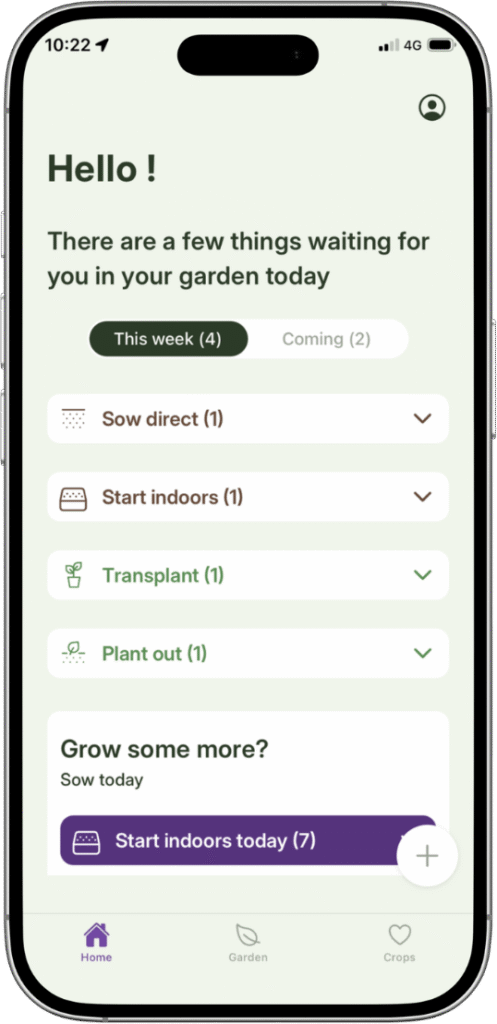
Grow To Eat’s unit of work is a crop you have not planted yet. It sets your sowing date from where you garden, and everything after it — potting on, planting out, first harvest — follows from the day you actually sowed. Sow a fortnight late and the rest of that crop’s dates move with you. The home screen shows this week’s sowings, the next step for everything in the ground, and what is ready to pick.
It is the difference between looking after a plant and producing a crop. Planta will remind you to water the tomato. It will not tell you that it is time to sow one, or when to stop sowing if you want fruit before the frosts.
Every plant you own, or only the ones you eat
Planta’s library runs to thousands of species and it is organised around care: what this plant needs, how often, in your conditions. Vegetables are in there, and since their update it handles plants in the ground as well as in pots, so a vegetable bed is not out of scope for it.
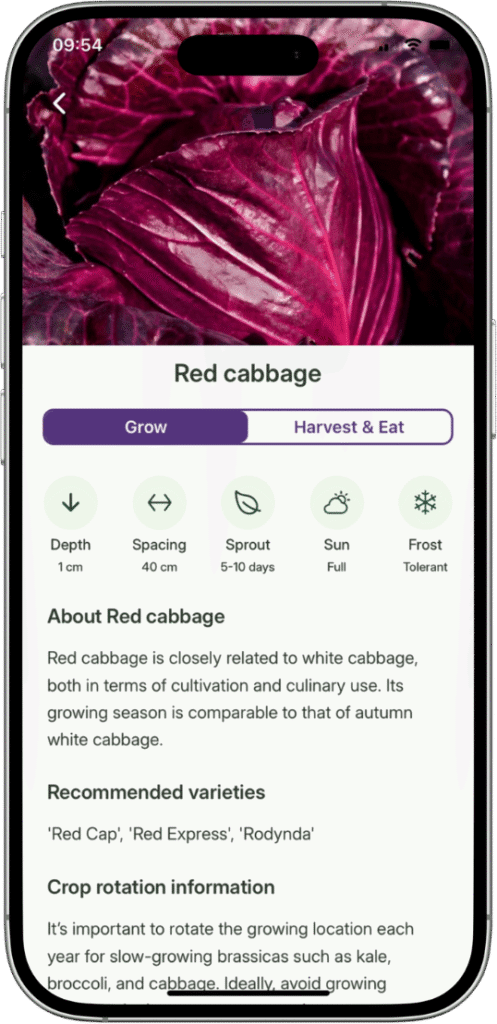
Grow To Eat carries 120+ crops and every one is food: vegetables, herbs, edible flowers, berries and berry bushes, and the kitchen-garden perennials. No houseplants, no ornamentals, no trees. Behind each crop is a full A–Z guide — sowing, spacing, feeding, common problems, when to pick, and how to store or preserve what you pick.
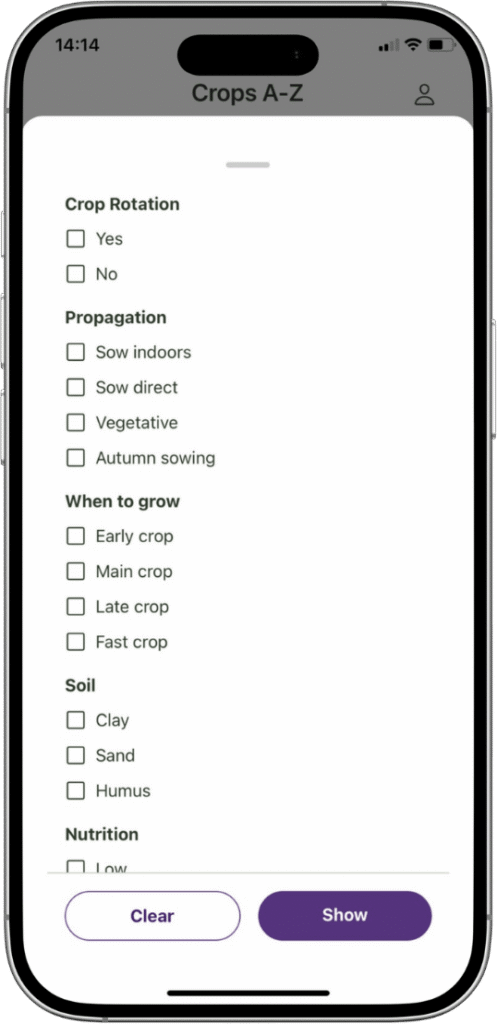
So the libraries are not really comparable. One is wide and built to keep things alive; the other is narrow and built to get things harvested. The filters follow from that: what will crop in partial shade, what feeds pollinators, what is forgiving in a first season, and how thirsty or hungry a crop will be once it is in the ground.
What you get without paying
Planta is free to download and use, and the free version keeps basic watering care. Most of what makes it Planta sits behind Premium: plant identification, Dr Planta, the light meter, plant recommendations, and every care schedule beyond watering — feeding, repotting, misting, pruning. There is no free trial of Premium. It is $7.99 a month, and a year costs somewhere between $35.99 and $47.99 depending on the offer you are shown.
Grow To Eat’s free tier has no caps on the part that matters: your whole sowing plan, the weekly view, harvest tracking, every A–Z growing guide and the crop filters, for as long as you want them. Premium adds the drag-and-drop bed planner, succession planting and your own custom crops, at €7.49 a month or €44.99 a year.
The prices land close enough that they are not the deciding factor. What you are choosing between is a year of care reminders for the plants you own, or a year of knowing what to sow and when.
Know what to sow in the garden this week
Free to start on iPhone and Android. Upgrade any time.
Choose Planta if…
- You want reminders to water and feed the plants you already own
- You are looking after houseplants as well as a garden
- You want to identify a plant, or find out why one is dying
- You want the care schedule to adjust to your local weather
- You share the watering with someone else in the house
- You garden in the southern hemisphere
Choose Grow To Eat if…
- You want to be told what to sow this week, and when to stop sowing
- You are growing food, and ornamentals are not the point
- You want the dates after sowing to move when you sow late
- You want a full growing guide behind every crop, free
- You want succession planting so beds keep producing
- You want to draw your beds and see what is in each one
Grow To Eat vs Planta: the bottom line
Grow To Eat is the one that plans a growing season. Sowing dates from your own location, a weekly list of what to sow, tend and pick, dates that move when you sow late, and 120+ edible crops with a full growing guide behind each — free, and uncapped.
For looking after plants (mostly houseplants) you already have, there is far more in Planta: watering worked out from your weather, feeding and repotting schedules, a photo diagnosis for a sick plant, plant identification, a light meter. None of that is in Grow To Eat. What Planta does not do is tell you what to sow, or when.
They are different sides of taking care of plants and gardening, and a lot of people will want both. If you have to pick one, pick the half you actually need help with: keeping your (house-) plants alive, or growing food in your garden.
Frequently asked questions
Which is better, Grow To Eat or Planta?
Can Planta tell me when to sow?
Does Planta work for vegetables and outdoor gardens?
What do you get on each free tier?
Which is cheaper, Grow To Eat or Planta?
Which has more plants?
Does Grow To Eat remind me to water?
Does Grow To Eat identify plants from a photo?
Can I use both?
Is Planta free?
Grow To Eat works out the next step for every crop you sow.
Free sowing plans and growing guides. No credit card required.
Head-to-head comparisons
Last updated: September 2026