
Grow To Eat vs Gardenate: which garden planner is right for you?
Grow To Eat tells you what to sow and when for your specific garden, then keeps track of everything you have sown — when to pot it on, when to plant it out and when to start harvest. Gardenate is a free planting calendar: choose a climate zone and a month, and it lists what can be sown now.
Grow To Eat tells you what to sow and when, for the place you actually garden. Log what you sowed and it works out the rest — when to pot it on, when to plant it out, when the first harvest is due — and puts this week’s jobs on the home screen. 120+ edible crops, each with a full A–Z guide behind it, and harvest ticked off as you pick.
Gardenate answers a narrower question: pick a climate zone and a month, and it lists what can be sown now. Each plant has a real growing guide behind it — sowing depth, spacing, soil temperature, weeks to harvest, companions, even how to freeze it — and there are planting records, a seed packet scanner, reminders into your phone calendar and a monthly email. What it does not do is follow you. The list is the same for everyone in your zone, and it does not change because you sowed late, or because that bed is now full.
At a glance
What they share
- ✓Planting dates matched to where you garden
- ✓Native iPhone and Android apps
- ✓A growing guide behind every crop
- ✓Companion planting guidance
- ✓A record of what you planted
- ✓Reminders during the season
- ✓A free tier with no time limit
Where Grow To Eat differs
- ●A plan built from your location, not a list for your climate zone
- ●Dates that move with you when you sow late
- ●A weekly “what to do now” view rather than a monthly list
- ●Succession planting, so a bed keeps producing after the first cut
- ●A drag-and-drop bed planner
- ●Crops filtered by shade, pollinators, difficulty, and water and feed needs
Grow To Eat vs Gardenate: feature comparison
| Feature | Gardenate | Grow To Eat |
|---|---|---|
| Growing food to a plan | ||
| What to sow now | A monthly list for your climate zone | A plan built from your location |
| Weekly “what to do now” view | – | ✓ |
| Dates shift when you sow late | – | ✓ |
| Succession planting for continuous harvest | – | ✓ |
| Harvest tracking | Planting records only | Mark a crop harvested |
| Drag-and-drop bed planner | – | ✓ |
| What you can grow | ||
| Focus | Vegetables, herbs and flowers | Edible crops only |
| Edible plants in the library | 103 — 82 vegetables and edible flowers, 21 herbs | 120+ edible crops |
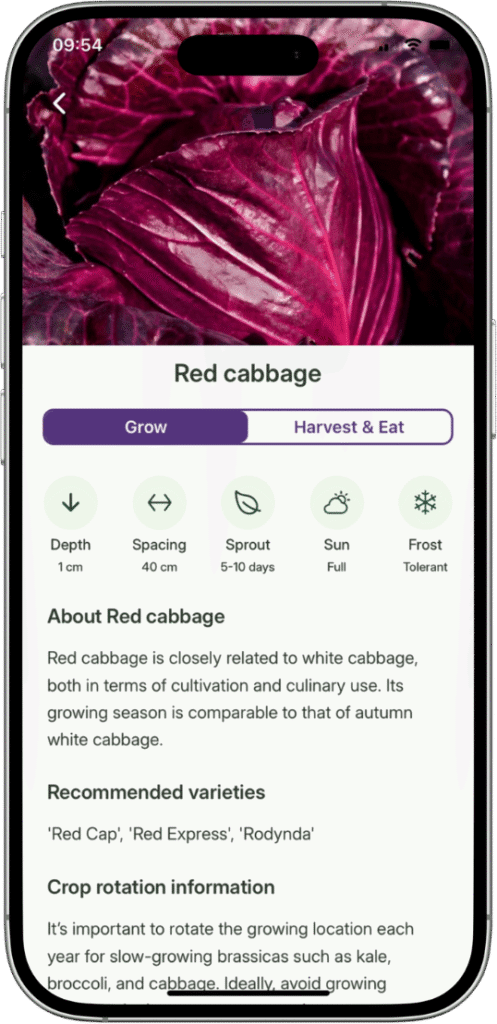
| Growing guidance per crop | Sowing depth, spacing, companions, weeks to harvest, kitchen use | Full A–Z guide: propagation to preservation |
| Crop filters (shade, pollinators, difficulty, water and feed needs) | – | ✓ |
| Where and how you use it | ||
| How your dates are set | You pick a climate zone | From your location |
| Where it works | 6 countries, both hemispheres | Northern hemisphere |
| Reminders | Into your phone calendar, plus a monthly email | In-app, worked out from your sowing dates |
| Seed packet scanner | ✓ | – |
| Platforms | Web, iPhone and Android | iPhone and Android |
| What it costs | ||
| What's behind the paywall | Nothing — the planting calendar is free | Garden planner, succession planting, custom crops |
| Free tier | The whole thing | Uncapped sowing plan + all guides |
| Yearly price | Free on the web; about $2 once for the app | €44.99 |
Prices and features checked September 2026. Gardenate pricing shown in USD, Grow To Eat in EUR. Gardenate features, plant counts and pricing taken from gardenate.com, September 2026. Prices shown in the currency each app charges in.
A plan that keeps up with what you actually sowed
Free sowing plans and full A–Z growing guides. No credit card required.
The key differences explained
A calendar for the month, or a plan that follows you
What can I sow this month, here? Gardenate answers that one very well. Pick a zone, pick the month, and the list appears. No account, no setup, and for a first season it may be all you want.
The list is the same for everyone in your zone, though, and it stays the same whatever you do. It does not know you sowed the beans a fortnight late, that the courgettes went in three weeks ago, or that the bed by the shed is full. Next month it shows you another list.
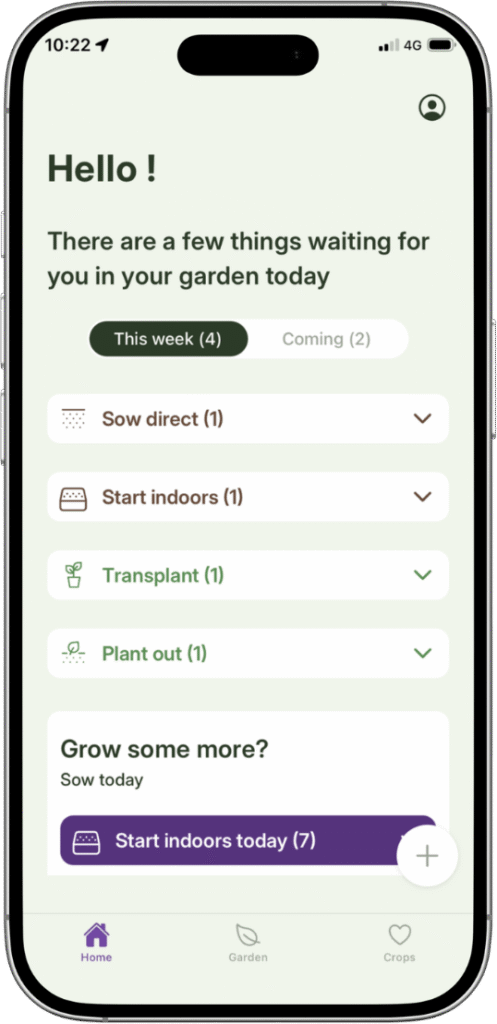
Grow To Eat starts in the same place, your location and what can go in now, then keeps going. Log the sowing and the app works forward from that date: when to pot on, when to plant out, when the first pick is due. Sow late and everything after it moves with you. Open it on a Saturday morning and the home screen already holds this week’s sowings, the next step for every crop in the ground, and whatever is ready to pick.
One tells you what the month allows. The other tells you what your garden needs.
Almost the same number of edible plants
Gardenate lists 192 plants: 82 vegetables and edible flowers, 21 herbs and 89 flowers. Grow To Eat carries 120+ crops, all of them edible. On the food side that is 103 against 120+, near enough the same.
The per-plant pages are close too. They give you sowing depth, spacing, soil temperature, weeks to harvest, growing notes, good and bad companions, and what to do with the crop in the kitchen. It is a real growing guide, not a date on a calendar.
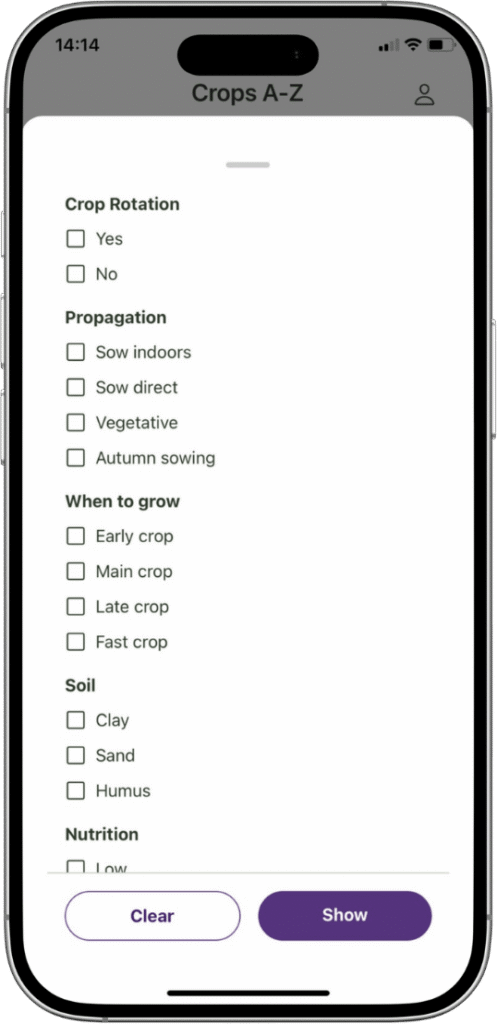
Grow To Eat goes further in the guide itself, which runs from propagation through to preservation on every crop, and in the filters that sit on top of it: what will crop in partial shade, what feeds pollinators, what is forgiving in a first season, how thirsty or hungry a crop will be once it is in. Those help you choose what to grow. The guide then tells you how to grow it.
What you get without paying
The two free versions are shaped differently. Grow To Eat’s free tier includes your whole sowing plan, the weekly view, harvest tracking, every A–Z growing guide and the crop filters, none of it capped — and it doesn’t expire. The bed planner, succession planting and your own custom crops are Premium, at €7.49 a month or €44.99 a year.
Gardenate’s website is free, there is a free Lite app, and the full app is a one-off of about $2, with no subscription and no cap.
Which leaves a simpler question than price. What do you want help with in your garden? Do you want a garden companion for the plants in your vegetable garden or a free general list of things to sow this month?
Know what to do in the garden this week
Free to start on iPhone and Android. Upgrade any time.
Choose Gardenate if…
- You want a free answer to what can be sown this month
- You garden in Australia, New Zealand or South Africa
- You want reminders in the calendar app you already use
- You are planning flowers as well as food
- You want to scan seed packets to save your varieties
- You do not want to make an account or pay anything
Choose Grow To Eat if…
- You want the plan to change when you sow late
- You want a weekly list rather than a monthly one
- You want to know what is ready to pick, not just what to sow
- You want to draw your beds and see what is in each one
- You want succession planting so beds keep producing
- You want crops filtered by shade, pollinators, difficulty and how thirsty they are
Grow To Eat vs Gardenate: the bottom line
Grow To Eat is the one that keeps working after the sowing. Dates from your own location, then potting on, planting out and harvest worked out from the day you actually sowed, a weekly view of what needs doing, harvest tracking, and 120+ edible crops with a full A–Z guide behind each — none of it capped on the free tier.
Gardenate’s free tier includes what can be sown this month in your climate zone, across six countries and both hemispheres, with a growing guide on every plant and reminders in the calendar you already use. It does not follow what you sowed, and next month it shows you another list.
So it comes down to how much of the job you want software for. Having a garden companion that tells you what to sow when where you live and then helps you keep track the next step for every plant in your vegetable garden from sowing to harvest, or what to sow is one afternoon in spring. Knowing what to do with it is the rest of the year.
Frequently asked questions
Which is better, Grow To Eat or Gardenate?
What do you get on each free tier?
Does Gardenate tell you when to sow?
What happens if I sow two weeks late?
Which has more plants?
Which is better for a beginner?
Does Gardenate have a garden planner?
Does Gardenate send reminders?
Which is cheaper?
Does Gardenate work in Australia and New Zealand?
What are the best Gardenate alternatives?
Grow To Eat works out the next step for every crop you sow.
Free sowing plans and growing guides. No credit card required.
Head-to-head comparisons
Last updated: September 2026