Companion Planting: Which Vegetables, Herbs, and Flowers Grow Well Together
- April 30, 2026
- By Editorial Team | Reviewed by:
- Christin Hanssen
Quick answer: Companion planting means growing different vegetables, herbs, and flowers next to each other so they help each other grow — by repelling pests, attracting pollinators, providing shade, or making better use of space. The classics that actually work include marigolds with carrots and onions, basil with tomatoes, dill and thyme near brassicas, and the “three sisters” combination of beans, sweetcorn, and squash.
This guide gives you a practical list of which combinations work, which to avoid, and how to use companion planting in a home vegetable garden.
What is companion planting?
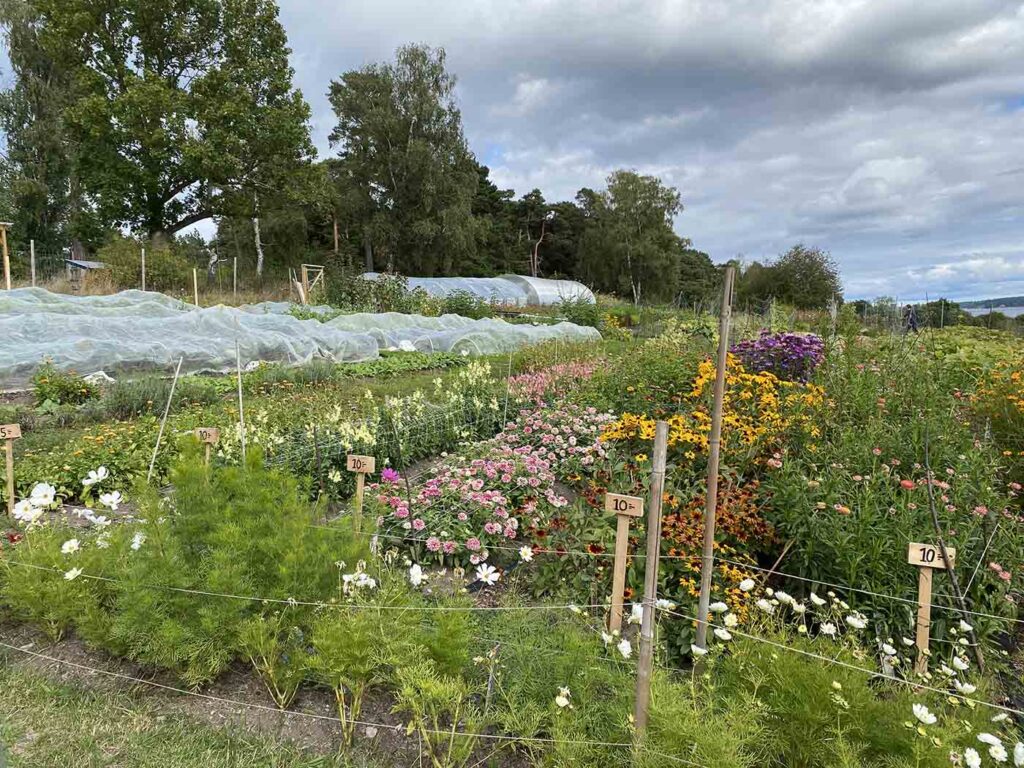
Companion planting is the practice of growing different crops close to each other so that they benefit each other. The benefits fall into four categories:
- Pest control. Strongly scented herbs and flowers can confuse or repel insects that would otherwise find your vegetables. Marigolds are the best-known example — their roots release compounds that reduce harmful nematodes in the soil.
- Pollinator attraction. Flowers and flowering herbs draw bees and hoverflies to your garden, which improves fruit set on tomatoes, beans, squash, and cucumbers.
- Better use of space. Tall plants (sweetcorn, climbing beans) can share a bed with low spreaders (squash, cucumbers) without competing for the same space.
- Soil and microbiome benefits. Diverse plantings build a healthier soil ecosystem than monocultures, with more beneficial microbes and fewer pest outbreaks.
Companion planting also makes the garden more beautiful — a bed of mixed vegetables, herbs, and flowers looks better than a uniform row of cabbages.
Two simple ways to companion plant
There are two practical approaches a home gardener can use without overcomplicating things:
1. Mix flowers and herbs in among your vegetables. Tuck marigolds (Tagetes) in along your carrot and onion rows. Plant basil between your tomatoes. Add nasturtiums at the edges of beds where they spill over. The flowers attract pollinators, repel some pests, and add colour.
2. Combine fast and slow crops in the same bed. Some vegetables take a long time to mature and don’t fill out the bed in their early weeks. You can sneak fast crops between them. For example, sow radishes or pak choi between young cabbages — the radishes will be harvested before the cabbages need the room. This overlaps with succession planting, which has more detail on timing.
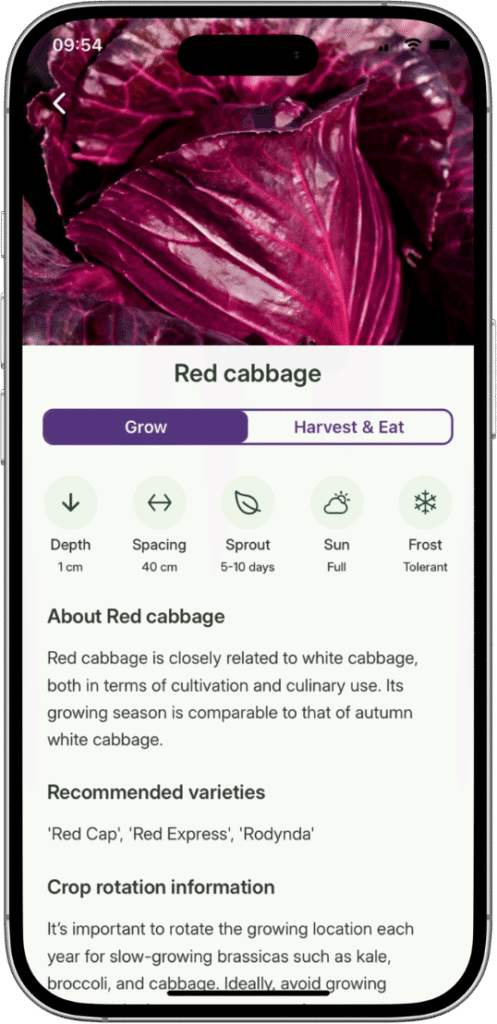
In the Grow To Eat app you’ll find easy support in finding crops that will grow well together.
Which vegetables grow well together?
Some classic combinations that work well in home gardens:
- Marigolds (Tagetes) with carrots, onions, and tomatoes. Marigolds reduce harmful nematodes in the soil, especially around carrots and bulb onions, which are most affected. The smaller signet marigolds (Tagetes tenuifolia) also work well with lettuce, beets, and chard.
- Basil with tomatoes. Said to deter whitefly and improve tomato flavour. Even if the flavour claim is folklore, the two share growing conditions and look good together.
- Dill and thyme near brassicas. Help deter cabbage white butterflies — fewer caterpillars on your cabbage and kale.
- Carrots and leeks together. Leeks deter carrot fly; carrots deter leek moth. A genuine two-way partnership.
- Lettuce among slower crops. Lettuce can be planted between leeks, celeriac, and globe artichoke. It’s harvested before the slower crops need the space.
- Broad beans between rows of potatoes. The beans fix nitrogen, the potatoes shade the bean roots, and the two have different pest profiles.
- The “three sisters”: beans, sweetcorn, and squash. Climbing beans use the corn stalks as a trellis; squash leaves shade the soil and suppress weeds; the beans add nitrogen to the soil. A traditional Indigenous American planting that genuinely works.
- Peas and beans with nasturtium, squash, or spinach. Helps keep the soil covered around the legume rows.
- Cabbage with thyme, dill, and sage. Aromatic herbs near brassicas reduce cabbage caterpillar pressure.
Which vegetables should not be planted together?
Some plants actively suppress each other or share so many pests and diseases that they should be kept apart:
- Potatoes and tomatoes. Same family, share blight and other diseases. Don’t grow them next to each other or rotate them into each other’s beds.
- Potatoes don’t grow well with cucumber, squash, pumpkin, celery, Jerusalem artichoke, or brassicas.Different reasons for each — some are competition, some are shared pests.
- Beans and peas don’t grow well with onions, garlic, or fennel. The alliums inhibit the nitrogen-fixing bacteria on legume roots; fennel suppresses many neighbours.
- Tomatoes shouldn’t be near potatoes, fennel, or brassicas. Disease overlap and competition.
- Fennel is famously antisocial. Most plants grow poorly near it. Give it its own corner.
Do I have to follow companion planting rules strictly?
No. Companion planting is a useful framework, not a strict ruleset. Many of the specific pairings have mixed scientific evidence — some are well-supported (marigolds reducing nematodes, the three sisters), others are largely traditional gardening lore.
The principles that are well supported:
- Mixed plantings host more beneficial insects than monocultures.
- Strongly scented herbs and flowers do confuse some pest insects.
- Diverse plantings reduce the chance that any one pest or disease wipes out your garden.
- Bare soil between rows is a missed opportunity — interplanting almost always uses space better.
Use the specific pairings as starting points, but don’t agonise over them. A garden with mixed vegetables, herbs, and flowers will outperform a strict monoculture even if some of the traditional pairings turn out to be folklore.
Frequently asked questions
What is companion planting in simple terms? Companion planting means growing different vegetables, herbs, and flowers next to each other so they help each other — by repelling pests, attracting pollinators, providing shade, or making better use of space.
What are the best companion plants for tomatoes? Basil is the classic, said to deter whitefly. Marigolds reduce soil nematodes. Lettuce and chives also work well at the base of tomato plants. Avoid planting tomatoes near potatoes, fennel, or brassicas.
What grows well with carrots? Onions and leeks (the alliums deter carrot fly), marigolds (reduce nematodes), and lettuce (uses the space between rows before the carrots fill out). Avoid planting carrots near dill or fennel once the carrots are established.
Do marigolds really repel pests? The evidence is strongest for soil nematodes — French marigolds (Tagetes patula) and signet marigolds (Tagetes tenuifolia) release compounds from their roots that reduce nematode populations. Above-ground pest control is more mixed, but marigolds also attract pollinators and look beautiful, so they’re worth growing either way.
Does companion planting actually work? Some pairings are well-supported by research (marigolds and nematodes, the three sisters). Others are traditional knowledge with limited scientific testing. The general principle — that mixed plantings are healthier than monocultures — is strongly supported.
What are the three sisters in companion planting? Beans, sweetcorn, and squash grown together. The corn provides a trellis for the climbing beans, the squash leaves shade the soil and suppress weeds, and the beans fix nitrogen for the other two. A traditional Indigenous American planting that works in modern gardens too.
Can I companion plant in raised beds and small spaces? Yes — companion planting actually works better in raised beds because plants are closer together and the benefits compound. Mix herbs and flowers throughout, not in separate sections.
Want some help?
The Grow To Eat app shows companion planting notes for every crop — which neighbours each plant likes and which it doesn’t. Plan a mixed bed in minutes instead of endless searches for companion planting advice.
Download free today