What Should You Grow? A Beginner's Guide to Planning Your Spring Vegetable Garden
- April 30, 2026
- By Editorial Team | Reviewed by:
- Christin Hanssen
Quick answer: The best things to grow are the foods you actually eat often, the ones that are hard to buy fresh, and crops that match your space, sunlight, and how much time you have. If you’re short on time, start with perennial vegetables and herbs (oregano, thyme, chives, Jerusalem artichoke), potatoes, and garlic. If you’re short on space, choose cut-and-come-again crops like chard, kale, and parsley, and grow vertically. If you’re gardening with kids, pick fast, fun crops like radishes, cherry tomatoes, and strawberries.
This guide walks you through exactly how to decide what to plant this spring, with concrete examples for every type of grower. The free Grow To Eat app handles the planning, sowing reminders, and harvest timing once you’ve chosen your crops.
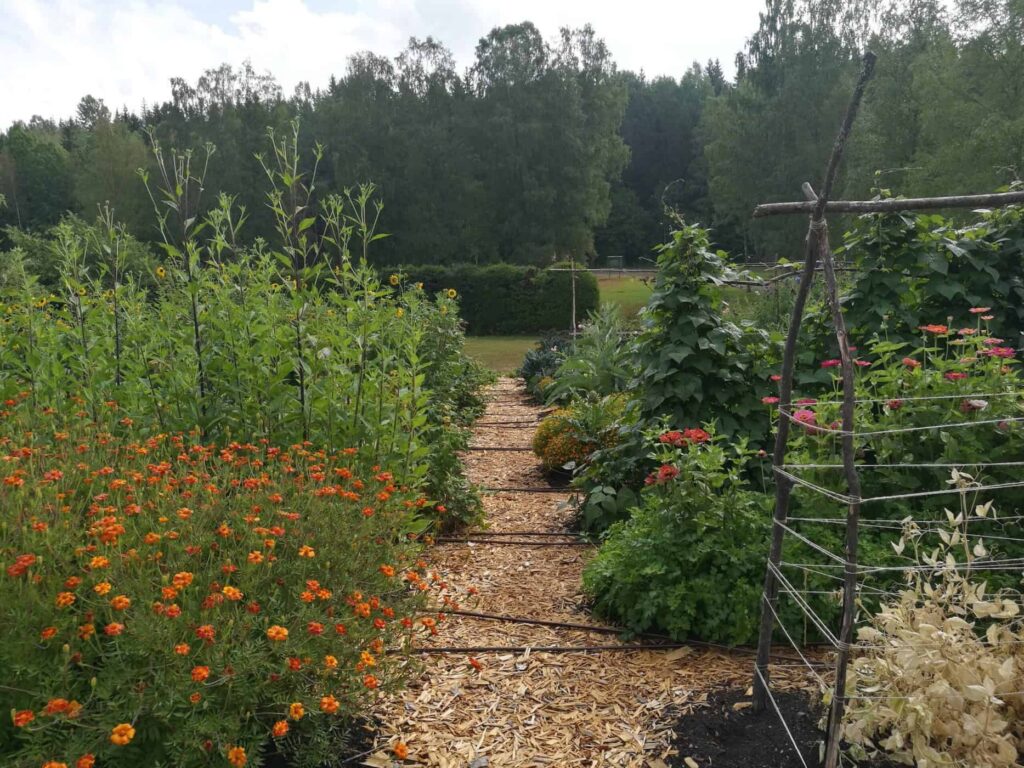
How do I decide what to grow in my vegetable garden?
Before buying seeds, answer these seven questions. They take five minutes and save a whole season of wasted effort.
Firstly three questions that inspire you to think through what you like to eat and what you would love to harvest from your garden:
- What do you actually like to eat? Don’t grow kohlrabi just because it’s easy if no one in your house will eat it.
- What do you use a lot of? Herbs, salad greens, and tomatoes usually pay back the most because you reach for them constantly.
- What’s hard or expensive to buy fresh? Fresh herbs, edible flowers, unusual tomato varieties, and tender salad mixes are worth the space.
Then four question that focus on you own growing conditions and how much time you have to spend gardening.
- What are the conditions where you’ll grow?
- Is the spot sunny, partly shaded, sheltered, or windy?
- Is the soil dry or moist?
- What kind of soil do you have — sandy, clay, loamy, compost-rich?
- How much room do you actually have?
- Does it need to look good? If the bed is visible from the patio, mix vegetables with edible flowers like nasturtium, calendula, and borage.
- How much time can you give it? Be honest. A 30-minute-a-week garden looks very different from a daily-tending garden.
- Are you growing with kids? Pick fast, visual, snackable crops.
Growing vegetables in your garden is most rewarding when your efforts pay off and when you harvest plants that you love to eat.
How do I choose crops that match my experience level?
When you have made the list of the vegetables, herbs and flowers you want to grow in your garden – it’s a good idea to match them to your level of expertise and also how much space you have.
In the free Grow To Eat app – you can easily find this information in the Cropz A-Z library by filtering out the plants that are easy or harder to grow. If you don’t have that much experience – make sure to choose crops that are easy to grow.
You’ll also find row- and plant distances for each plant so that you can estimate how much space each type of plant takes up in your garden bed.
Most beginners try to grow too many different things. Pick six to eight crops you’ll actually use and grow them well.
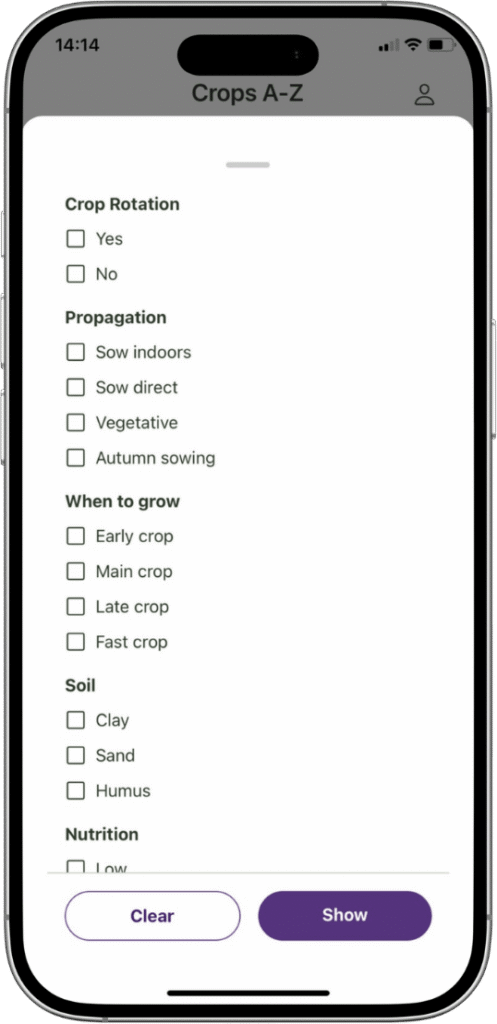
In the Grow To Eat app you’ll find easy support in finding crops that suit you and the location of your garden.
How do I match plants to my growing conditions?
A vegetable’s success depends mostly on three factors: light, water, and soil. Match the plant to the spot, not the spot to the plant.
- Full sun (6+ hours direct): tomatoes, peppers, squash, melons, beans, most herbs.
- Partial shade (3–5 hours): lettuce, spinach, chard, kale, parsley, chives, mint, currants.
- Dry soil: Mediterranean herbs, perennial onions, Jerusalem artichoke.
- Moist soil: mint, watercress, celery, brassicas.
If you’re not sure what your plot offers, watch the spot for a single day in spring. Note when the sun hits it and when shade arrives.
What are the easiest vegetables to grow if I have very little time?
If you can only spare an hour a week, focus on crops that are forgiving, low-maintenance, and don’t need constant watering or feeding.
Perennial vegetables are the lowest-effort food you can grow. Plant them once and they come back every year, usually without watering or fertilizing. Try:
- Jerusalem artichoke (sunchoke)
- Tree onion / walking onion
- Good King Henry (also known as lungrot in Swedish)
- Rhubarb
- Asparagus (slower to establish but produces for 15+ years)
Perennial herbs are similarly tough and drought-tolerant once established. The reliable starters are oregano, thyme, sage, rosemary, tarragon, mint, and chives.
Cut-and-come-again crops keep producing all season from a single planting. Good choices: Swiss chard, kale, parsley, leaf lettuce, and spinach.
Direct-sown crops skip the indoor seed-starting step. Just keep the soil moist while germinating. Beans, peas, radishes, carrots, dill, and beets all work well direct-sown.
Potatoes and garlic are nearly foolproof. Garlic in particular is a “plant in autumn, ignore until summer” crop.
What can I grow if I only have a small space, balcony, or containers?
Small-space growing is about getting more harvest per square foot. Three techniques do most of the work:
Succession planting. Replace finished crops with new ones in the same spot. A spring lettuce bed becomes a summer bean bed becomes an autumn spinach bed.
Companion planting (interplanting). Tuck fast crops between slow ones. Radishes and lettuce mature in 4–6 weeks and can be harvested before slower neighbours like cabbage or tomatoes need the room. Classic pairings: corn with squash, carrots with onions, basil with tomatoes.
Vertical growing. Trellis anything that climbs — peas, pole beans, cucumbers, vining squash, indeterminate tomatoes. You’ll often double your yield per square metre.
For containers and balconies specifically, the highest-return crops are cherry tomatoes, salad greens, herbs, chilli peppers, strawberries, and bush beans.
What should I grow if I don't have reliable watering, like at a summer cottage?
Choose drought-tolerant crops that survive a week or two between waterings. Mediterranean herbs (rosemary, thyme, oregano, sage) are the standout choice.
Perennial vegetables like Jerusalem artichoke and rhubarb also handle neglect well. Garlic, onions, and potatoes ripen on their own once established.
Avoid thirsty crops like lettuce, cucumber, and celery if you can’t water regularly.
What's good to grow with kids?
Children stay engaged with crops that are fast, colourful, and snackable straight from the plant.
- Radishes — ready in 25–30 days, easy for small hands to sow.
- Cherry tomatoes — sweet, plentiful, and come in yellow, orange, purple, and striped varieties.
- Summer squash in unusual shapes and colours.
- Strawberries and wild strawberries — perennial, low-effort, and irresistible.
- Sugar snap peas — eaten whole, climb a fence, very productive.
- Sunflowers — not edible as a meal but the seeds and the height are exciting for kids.
How the Grow To Eat app helps you choose what to plant
Most beginners get stuck not on how to grow something, but on which things to choose and when to start them. The Grow To Eat app is built specifically for this decision.
- Filterable plant library of 110+ edible crops. Sort by water needs, shade tolerance, decorative value, perennial vs. annual, cut-and-come-again habit, and whether the plant suits row planting or square-foot beds.
- Plant cards with sowing-to-harvest advice, recommended varieties, plant and row spacing, and which neighbours each crop likes or dislikes.
- Automatic reminders for sowing, planting out, and harvest, tied to your local season.
- Weekly sowing tips so you always know what to start now.
- Advice at your fingertips, so you can plan from the kitchen table and check tasks from the garden.
The plant library is free. Try the planning app here: Grow To Eat app
Frequently asked questions
What is the easiest vegetable for a complete beginner to grow? Radishes, lettuce, bush beans, potatoes, and chives are the most beginner-friendly. Radishes go from seed to harvest in under a month, which gives quick confidence.
How many vegetables should a first-time gardener grow? Six to eight different crops is the sweet spot. Fewer and you don’t get variety; more and most beginners get overwhelmed and abandon some.
What grows best in shade? Leafy greens and herbs tolerate shade best: lettuce, spinach, chard, kale, parsley, chives, and mint. Fruiting crops like tomatoes and peppers need full sun.
What can I plant in spring? In early spring: peas, spinach, lettuce, radishes, carrots, onions, and potatoes can go directly into the ground. Start tomatoes, peppers, and squash indoors and transplant after the last frost.
Are perennial vegetables worth growing? Yes — they’re the highest return on effort in a vegetable garden. One planting produces for years with almost no work. Asparagus, rhubarb, Jerusalem artichoke, and perennial herbs are the standouts.
How do I plan my vegetable garden? Start with what you eat, check your light and space, pick a small number of crops, and map out where each one will go. The Grow To Eat app does this digitally and adds a free sowing calendar tailored to your location.
Want some help?
Choosing what to grow is easier with a filterable plant library. The Grow To Eat app’s Crops section lets you sort 110+ edible crops by sun needs, water needs, perennial vs annual, and more — so the list narrows itself down to what fits your garden.
Download free today