Succession Planting: How to Get Continuous Harvests From the Same Garden Bed
- November 25, 2025
- By Editorial Team | Reviewed by:
- Christin Hanssen
Quick answer: Succession planting means filling the same garden bed with a series of crops across the season instead of leaving it empty after one harvest. The result is two or three harvests from the same square metre, less weed pressure, and fresh vegetables from spring through autumn. The trick is matching crops to the right slot — fast spring crops first, main-season crops in the middle, quick autumn crops to finish.
This guide shows you exactly how to plan a succession-planted bed, which crops fit which slot, and how to use the Grow To Eat app’s plant categories to find the right crop for any time of the season.
What is succession planting?
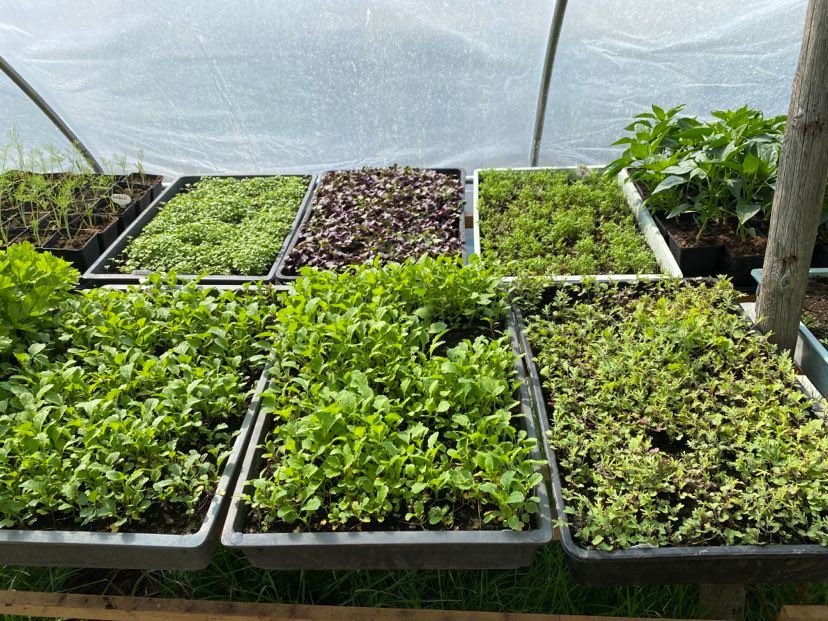
Succession planting is the practice of growing more than one crop in the same spot during a single season. As soon as one crop is harvested, another is sown or transplanted in its place. A bed that grows just one crop produces one harvest. The same bed succession-planted produces two, sometimes three.
Done well, succession planting gives you four benefits:
- A bigger total harvest from the same square metre.
- More variety — you can grow more crops without needing more space.
- Fresh vegetables for most of the season, not just one peak week of glut.
- Less weed pressure, because bare soil invites weeds and a planted bed crowds them out.
Succession planting is the single highest-leverage technique for small gardens, raised beds, and balcony growers. It’s also the easiest way to extend your harvest into autumn.
How do I plan a succession-planted garden?
The simplest way to stay organised is to think in three groups, based on when each crop will be harvested. This makes it easy to see which beds will free up first and what should go in next.
Group 1 — Spring harvest. Crops that overwinter or that germinate in cold soil and grow quickly. Examples: lettuce, radishes, spinach, arugula, early carrots. Harvested in May–June, freeing up the bed for a summer crop.
Group 2 — Summer harvest. Crops harvested in July–August. Examples: early potatoes, sugar snap peas, scallions, kohlrabi, beets, Asian greens. Once these are out, fast-growing crops that resist bolting in heat are your best follow-up.
Group 3 — Late-summer harvest. Crops harvested in August–September. Examples: peas, beans, broad beans, onions, main-crop carrots. These free up the bed late enough that the follow-up needs to handle cooler weather.
Match each group with a follow-up crop suited to the time of year and the conditions of the freed-up bed. The next two sections give you the tools to do that.
A simple example: one bed, three harvests
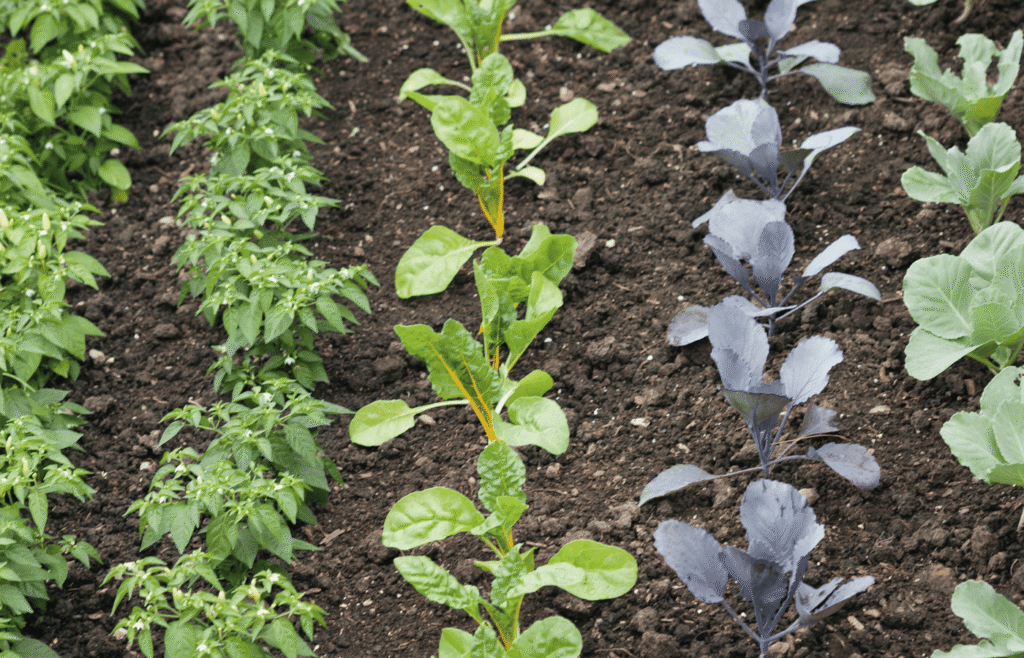
Here’s what a single succession-planted bed can look like across one season in a temperate climate:
- Mid-April: Sow radishes and a row of leaf lettuce.
- Mid–late May: Harvest the radishes (around 25–30 days from sowing) and the lettuce as cut-and-come-again.
- Early June: Pull the rest of the lettuce. Transplant bush beans into the same row.
- Mid-August: Harvest the beans over 2–3 weeks. Pull the plants.
- Late August: Sow spinach and arugula directly. Both germinate well in cooling soil.
- October: Harvest spinach and arugula until the first hard frost.
Three harvests, one bed, no overlap. The timing works because each crop’s days-to-maturity fits the window between the last and next harvest.
Which crops are best for succession planting?
The Grow To Eat plant library groups crops into five categories that map directly onto succession-planting decisions. Each category is a slot in the season — when you know the slot, you know which crop to reach for.
Pre-culture (early-season crops)
Crops that germinate in cool soil, grow quickly, and produce an early harvest before main crops are sown. Perfect for Group 1 — Spring harvest.
Examples: radishes, lettuce, spinach, arugula, early carrots.
Main crop
Crops with a long growing season that need to occupy the bed for most of summer. These typically follow a Group 1 spring crop.
Examples: leeks, kohlrabi, main-crop potatoes, onions from sets, winter cabbage, sweetcorn.
Mid-season crop
Fast-growing crops that go from sowing to harvest in a short window and resist bolting in midsummer heat. Perfect for the slot after Group 2 — Summer harvest.
Examples: beets, sugar snap peas, scallions, bush beans, dill.
Successive crop
Cool-tolerant, fast-growing crops sown after a main crop is harvested in late summer. Perfect for the slot after Group 3 — Late-summer harvest.
Examples: radishes, arugula, spinach, winter lettuce, mâche (corn salad).
Autumn sowing
Crops sown in late autumn that lie dormant in the soil and germinate when spring warmth arrives. They free up your spring planting time.
Examples: garlic, parsnips, broad beans, autumn-sown spinach.
A single crop can appear in more than one category. Spinach, for example, works as a pre-culture, a successive crop, and an autumn sowing — what matters is the time of year you’re planting it.
For a per-crop schedule of how often to replant each vegetable, see our succession planting schedule.
How to find succession-planting crops in the Grow To Eat app
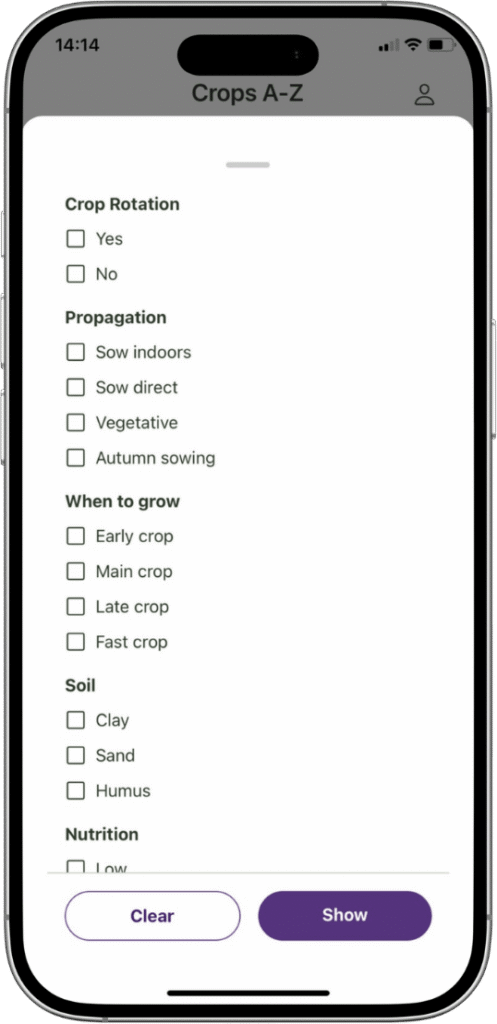
Most beginners get stuck not on whether to succession-plant, but on which crop fits the slot they have right now. The Grow To Eat app solves this with a “Type of crop” filter in the plant library.
To find the right crop for any moment in the season:
- Open the Crops section in the app.
- Tap the filter icon above the library.
- Scroll to Type of crop.
- Select the category that matches your slot — Pre-culture, Main crop, Mid-season crop, Successive crop, or Autumn sowing.
For example, in late June or July when your spring crops have been harvested, filter by Mid-season crop and you’ll see the fast-growing options that will mature before frost. In August, filter by Successive crop for cool-tolerant follow-ups.
Each plant card also shows days to maturity, plant and row spacing, and which crops it grows well alongside — everything you need to confirm the crop will fit the slot before you sow.
How does succession planting work with crop rotation?
Crop rotation prevents soil-borne diseases by avoiding planting the same plant family in the same spot two years running. Succession planting works inside a single season; rotation works across seasons. They’re compatible — but only if you watch the main crops, not the fast follow-ups.
The fast-growing crops used in succession planting (lettuce, radishes, spinach, arugula) are usually in the bed for so short a time that they don’t trigger soil-disease problems. It’s the main crops — tomatoes, potatoes, cabbages, onions — that need rotation tracking. Keep a simple note of where you grew each main crop family, and avoid repeating the same family in the same bed for at least two or three years.
If you’re using the Grow To Eat app, the plant card for each main crop tells you which plant family it belongs to, which makes year-to-year rotation easier to plan.
What if I don't have time to keep replanting all season?
Succession planting doesn’t have to mean three full plantings. Two of the simplest ways to get most of the benefit with less work:
- Plant one early crop and one main crop. Spring lettuce or radishes, then a single main-season crop like bush beans or kale. That’s already a 2x harvest with no autumn replanting.
- Use cut-and-come-again crops as the “main” layer. Chard, kale, leaf lettuce, and parsley produce for months from a single sowing, so you only need one transition (spring crop → cut-and-come-again) instead of two.
A garden tended for 30 minutes a week can still get two harvests from the same bed — you just choose forgiving crops with wide planting windows.
Frequently asked questions
What is succession planting in simple terms? Succession planting means growing more than one crop in the same spot during a single season. When the first crop is harvested, a second crop is sown or transplanted in its place, so the bed is never empty.
How is succession planting different from crop rotation? Succession planting happens within one season — multiple crops in one bed, one after the other. Crop rotation happens across years — moving the same crop to a different bed each year to prevent soil-borne disease.
How many succession plantings can I do in one season? Two is realistic for most gardeners. Three is achievable in temperate climates if you start with a fast spring crop, follow with a fast summer crop, and end with a cold-tolerant autumn crop.
Which vegetables are best for succession planting? The fastest-maturing crops give you the most flexibility: radishes, lettuce, bush beans, beets, and scallions. These all go from seed to harvest in 25–60 days, which is short enough to fit between slower main crops.
When should I start succession planting? Start at the beginning of your growing season with cold-hardy spring crops (lettuce, radishes, spinach). Plan the next planting before you harvest, so you can sow or transplant the same week the bed clears.
Do I need to add fertilizer between successions? For light feeders like lettuce and radishes following each other, usually not. After a heavy feeder (potatoes, brassicas, sweetcorn), top up with compost or a balanced organic fertilizer before the next crop goes in.
Can I succession-plant in containers and raised beds? Yes — containers and raised beds are ideal for succession planting because they warm up earlier in spring and you have full control of the soil. Refresh the top few centimetres of compost between crops.
Want some help?
Every crop in the Grow To Eat app’s crops section is tagged by succession-planting category — Pre-culture, Main, Mid-season, Successive, and Autumn sowing. Choose the category you are looking for in the filter, and the right crops appear instantly.
Download free today